

Motorcycles are evolving quickly as new technologies enter the Nigerian and global markets. Riders, delivery companies, and transport fleets are now exploring alternatives beyond traditional petrol bikes — including CNG (Compressed Natural Gas) and battery-powered electric motorcycles.
Each option has its strengths and weaknesses. Below is a clear comparison to help you decide which one fits your needs in terms of cost, performance, and long-term value.
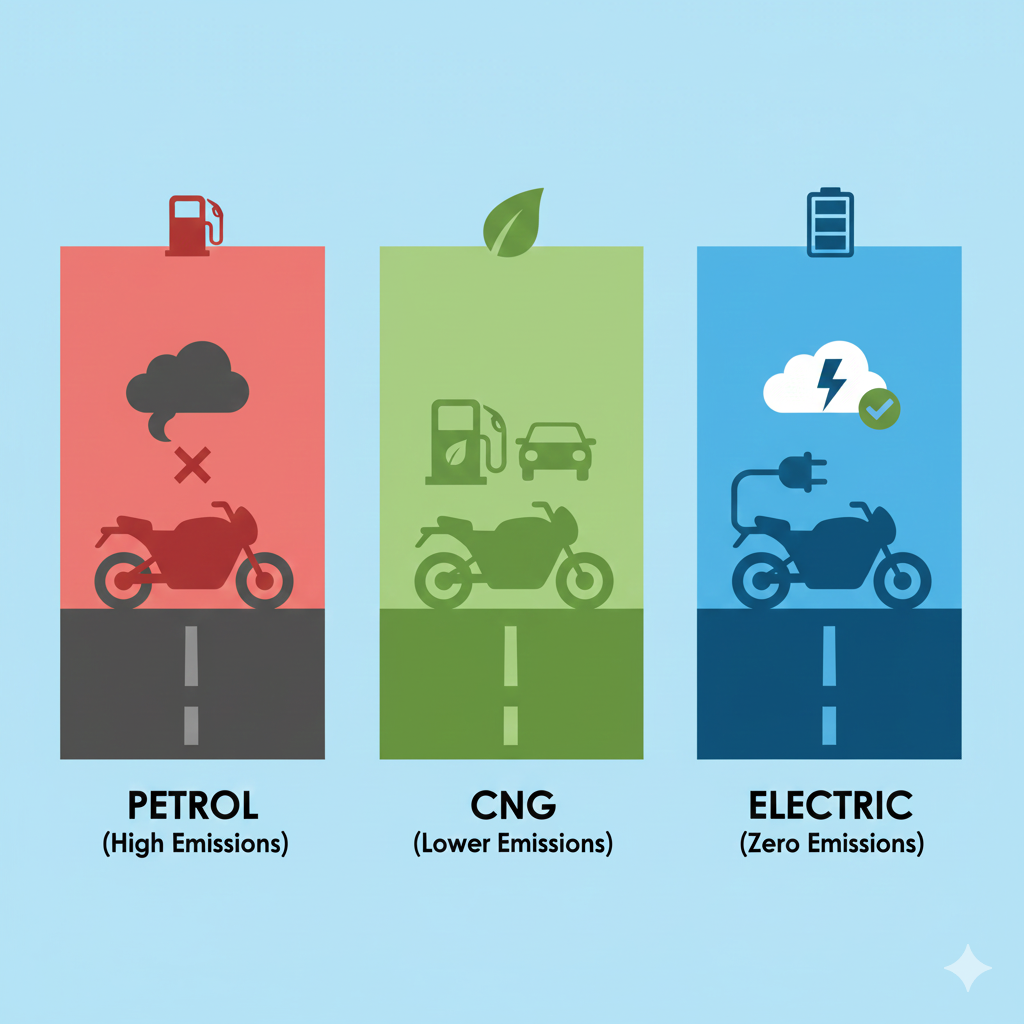
1. Petrol Motorcycles
Petrol-powered bikes remain the most common in Nigeria and across Africa.
Advantages
- Easy to service — mechanics and spare parts are available everywhere.
- Strong performance — good power for long distances and heavy loads.
- Fast refuelling — just a few minutes at any fuel station.
- Suitable for rough roads — durable for commercial and private use.
Disadvantages
- High fuel cost — petrol prices fluctuate, which affects daily expenses.
- More emissions — contributes to air pollution.
- More moving parts — requires frequent maintenance (engine oil, plugs, filters, etc.).
2. CNG Motorcycles (Compressed Natural Gas)
CNG-powered bikes are becoming more popular due to rising petrol prices and the push for cleaner energy.
Advantages
- Cheaper running cost — CNG is significantly cheaper than petrol.
- Lower emissions — more environmentally friendly.
- Long engine life — cleaner combustion reduces engine wear.
- Good for commercial riders — daily profit increases due to low fuel cost.
Disadvantages
- Few filling stations — CNG stations are still limited in Nigeria.
- Slightly lower power — compared to petrol bikes.
- Initial conversion cost — if you’re converting an existing petrol motorcycle.
3. Battery-Powered Electric Motorcycles
These are fully electric bikes powered by rechargeable batteries.
Advantages
- Extremely low running cost — no petrol, no engine oil.
- Quiet and smooth — no vibration and fewer moving parts.
- Eco-friendly — zero emissions.
- Lower maintenance — no plugs, oil, filters, carburetors, or exhaust issues.
Disadvantages
- Charging time — takes hours unless you have a fast-charging option.
- Shorter range — distance per charge is limited.
- Battery replacement cost — batteries are expensive after long-term use.
- Not ideal for long inter-state trips.
4. Side-by-Side Comparison
| Feature | Petrol | CNG | Electric |
|---|---|---|---|
| Running Cost | High | Low | Very Low |
| Maintenance | High | Medium | Very Low |
| Power/Performance | Strong | Medium | Moderate |
| Availability | Very High | Low | Low–Medium |
| Eco-friendliness | Low | Medium–High | Very High |
| Refuel/Recharge Time | Minutes | Minutes | Hours |
| Best For | All use cases | Commercial riders | City riders / delivery |

5. Conclusion
Choosing the right motorcycle depends on your budget, location, and how you use your bike.
- If you need power and nationwide support, petrol is still the most practical.
- If you want lower daily running costs and have access to a station, CNG is a smart upgrade.
- If you want the cleanest and cheapest long-term option for city movement, an electric motorcycle is ideal.
Each option has its place in today’s market — and understanding the differences helps you make the best choice for your riding or business needs.